
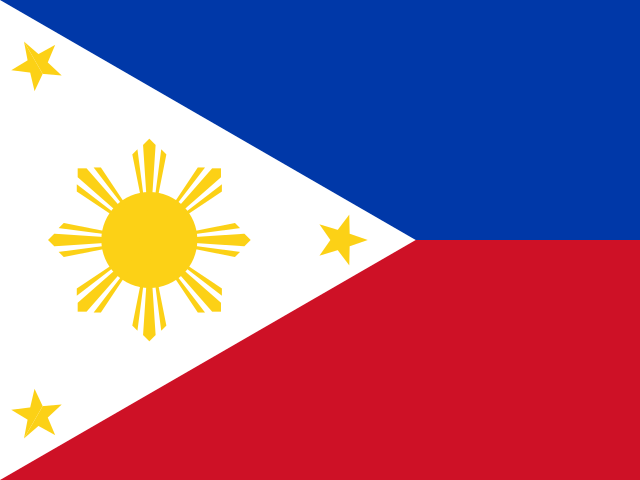
About the Philippine Peso
The Philippine Peso has a long history, dating back to the Spanish colonial period. The modern peso was introduced after independence, replacing the peso that was tied to the U.S. Dollar.
The name 'Peso' is Spanish for 'weight', reflecting its origins as a silver coin.
Interesting Facts
Remittances Powerhouse
The Philippine Peso is strongly influenced by remittances sent home by millions of Overseas Filipino Workers (OFWs), which account for a significant portion of the country's GDP.
National Heroes on Notes
Philippine banknotes feature portraits of prominent national heroes, such as José Rizal and Benigno Aquino Jr., celebrating the country's struggle for independence and democracy.
A Mix of Paper and Polymer
The Philippines has started issuing polymer banknotes, beginning with the 1000-peso denomination, for improved durability and security, alongside traditional paper notes.
Historical Timeline
The Philippines declares independence from Spain.
The Philippine peso, backed by U.S. silver, is introduced.
The Central Bank of the Philippines is established.
Bangko Sentral ng Pilipinas (BSP) is established, taking over central banking functions.
Denominations
Banknotes
Coins
Security Features
Quick Facts
- ISO Code
- PHP
- Symbol
- ₱
- Numeric Code
- 608
- Subunit
- Centavo (1/100)
- Introduced
- 1852-01-01
Central Bank
- Name
- Bangko Sentral ng Pilipinas
- Headquarters
- Manila, Philippines
- Founded
- 1993
- Current Governor
- Eli M. Remolona, Jr. (since 2023)
Economic Data
- Reserve Currency Share
- 0.1%
- Forex Volume Share
- 0.3%
- Inflation Rate
- 3.8%
- Interest Rate
- 6.50%
Exchange Rates




What Affects the PHP Exchange Rate?
Ready to Convert PHP?
Get real-time exchange rates and convert Philippine Peso to any currency.


