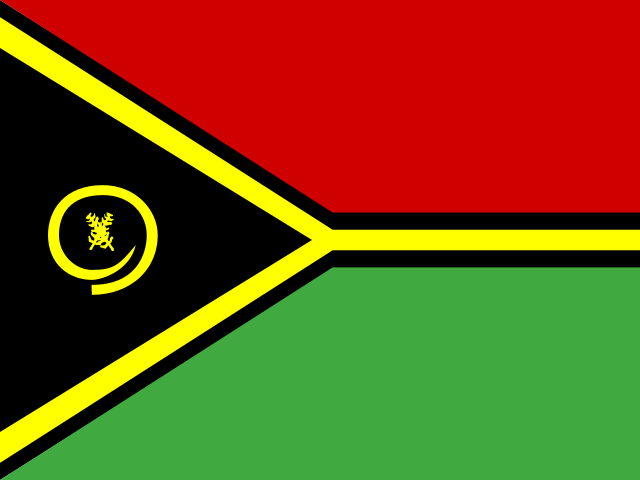
About the Vanuatu Vatu
The Vatu was introduced in 1982, replacing the New Hebrides franc and the Australian Dollar. It has no smaller subdivisions.
The name 'Vatu' is a local language word for 'stone', reflecting traditional forms of currency like stone money.
Interesting Facts
No Subunits
The Vatu is one of the few currencies in the world that does not have any smaller subdivisions (like cents or pence). The smallest unit is 1 Vatu.
Named After Stone Money
The name 'Vatu' means 'stone' in local languages, a tribute to the historical use of stone money as a medium of exchange in some Pacific cultures.
A Tourism Hotspot
Vanuatu's economy and the Vatu's value are heavily reliant on tourism, attracted by its pristine beaches, volcanoes, and unique cultural experiences.
Historical Timeline
Vanuatu gains independence from France and the United Kingdom.
The Reserve Bank of Vanuatu is established.
The Vatu is introduced.
A new series of polymer banknotes is introduced.
Denominations
Banknotes
Coins
Security Features
Quick Facts
- ISO Code
- VUV
- Symbol
- VT
- Numeric Code
- 548
- Subunit
- (1/1)
- Introduced
- 1982-01-01
Central Bank
- Name
- Reserve Bank of Vanuatu
- Headquarters
- Port Vila, Vanuatu
- Founded
- 1981
- Current Governor
- Simeon Malachi Athy (since 2023)
Economic Data
- Reserve Currency Share
- 0.0%
- Forex Volume Share
- 0.0%
- Inflation Rate
- 2.8%
- Interest Rate
- 3.25%
Exchange Rates



What Affects the VUV Exchange Rate?
Ready to Convert VUV?
Get real-time exchange rates and convert Vanuatu Vatu to any currency.


