
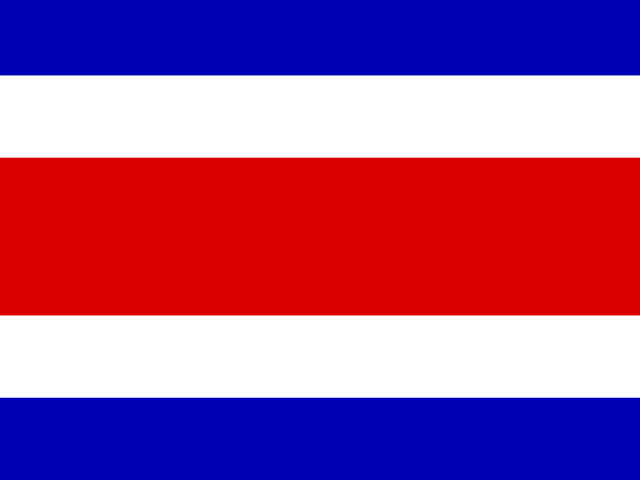
About the Costa Rican Colón
The Colón was introduced in 1896, replacing the Costa Rican Peso at par. It was named after Christopher Columbus (Cristóbal Colón in Spanish).
The currency is named after Christopher Columbus, known as Cristóbal Colón in Spanish, who landed in Costa Rica in 1502.
Interesting Facts
Named for Columbus
The currency is named in honor of Christopher Columbus (Cristóbal Colón), who visited the country on his final voyage.
Colorful Wildlife on Notes
Costa Rican banknotes are famous for their vibrant and beautiful designs, showcasing the country's rich biodiversity, including sharks, monkeys, and hummingbirds.
Pura Vida Economy
The Colón's value is strongly linked to tourism and exports of high-tech goods like medical devices and agricultural products like coffee and bananas.
Historical Timeline
The Colón is introduced.
The Central Bank of Costa Rica is established.
A new series of banknotes is introduced, printed on polymer and cotton paper substrates.
Denominations
Banknotes
Coins
Security Features
Quick Facts
- ISO Code
- CRC
- Symbol
- ₡
- Numeric Code
- 188
- Subunit
- Céntimo (1/100)
- Introduced
- 1896-10-26
Central Bank
- Name
- Central Bank of Costa Rica
- Headquarters
- San José, Costa Rica
- Founded
- 1950
- Current Governor
- Róger Madrigal (since 2022)
Economic Data
- Reserve Currency Share
- 0.0%
- Forex Volume Share
- 0.0%
- Inflation Rate
- 1.21%
- Interest Rate
- 4.75%
Exchange Rates


What Affects the CRC Exchange Rate?
Ready to Convert CRC?
Get real-time exchange rates and convert Costa Rican Colón to any currency.


