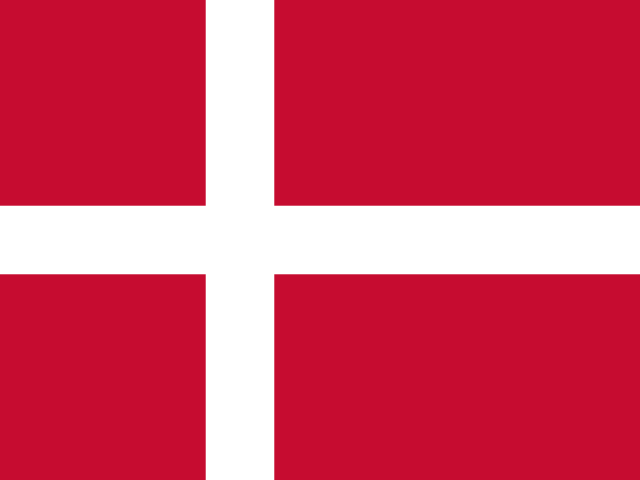
About the Danish Krone
The Danish Krone was introduced as part of the Scandinavian Monetary Union, which also included Sweden and Norway. The union dissolved after World War I, but the countries kept the 'krone' name.
The name 'Krone' means 'crown' in Danish, a common name for currencies in monarchies.
Interesting Facts
Tightly Pegged to the Euro
The Danish Krone is part of the EU's Exchange Rate Mechanism (ERM II), meaning it is kept within a very tight band around a central rate against the Euro.
Bridges on Banknotes
The current series of Danish banknotes features famous Danish bridges on one side and archaeological finds on the other, symbolizing the connection between past and present.
Opt-Out of the Euro
Denmark is one of the few EU countries that has a formal opt-out from adopting the Euro, a decision confirmed by a referendum in 2000.
Historical Timeline
The Krone is introduced.
The Scandinavian Monetary Union is dissolved.
Denmark opts out of adopting the Euro but pegs the Krone to it via the ERM II mechanism.
Denominations
Banknotes
Coins
Security Features
Quick Facts
- ISO Code
- DKK
- Symbol
- kr
- Numeric Code
- 208
- Subunit
- Øre (1/100)
- Introduced
- 1875-01-01
Central Bank
- Name
- Danmarks Nationalbank
- Headquarters
- Copenhagen, Denmark
- Founded
- 1818
- Current Governor
- Christian Kettel Thomsen (since 2023)
Economic Data
- Reserve Currency Share
- 0.0%
- Forex Volume Share
- 0.7%
- Inflation Rate
- 2.1%
- Interest Rate
- 3.35%
Exchange Rates
Used In
What Affects the DKK Exchange Rate?
Ready to Convert DKK?
Get real-time exchange rates and convert Danish Krone to any currency.


