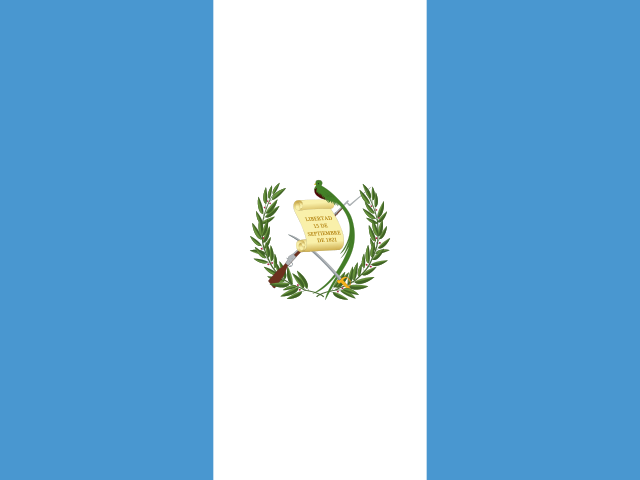
About the Guatemalan Quetzal
The Quetzal was introduced in 1925, replacing the Guatemalan Peso. It was pegged to the U.S. Dollar until 1987.
The currency is named after the Resplendent Quetzal, the national bird of Guatemala, whose tail feathers were used as currency by the ancient Maya.
Interesting Facts
Named After the National Bird
The Quetzal is named after Guatemala's beautiful national bird. In ancient Mayan culture, the bird's feathers were so prized they were used as money.
A Link to Mayan Culture
Guatemalan currency is rich with references to its Mayan heritage, including figures like Tecún Umán, the last ruler of the K'iche' Maya people.
Remittances are Key
The value of the Quetzal is significantly supported by remittances sent home from Guatemalans living abroad, especially in the United States.
Historical Timeline
The Quetzal is introduced.
The peg to the U.S. Dollar is removed, and the Quetzal becomes a floating currency.
Denominations
Banknotes
Coins
Security Features
Quick Facts
- ISO Code
- GTQ
- Symbol
- Q
- Numeric Code
- 320
- Subunit
- Centavo (1/100)
- Introduced
- 1925-01-01
Central Bank
- Name
- Bank of Guatemala
- Headquarters
- Guatemala City, Guatemala
- Founded
- 1926
- Current Governor
- Alvaro Gonzalez Ricci (since 2022)
Economic Data
- Reserve Currency Share
- 0.0%
- Forex Volume Share
- 0.0%
- Inflation Rate
- 3.41%
- Interest Rate
- 5.00%
Exchange Rates
What Affects the GTQ Exchange Rate?
Ready to Convert GTQ?
Get real-time exchange rates and convert Guatemalan Quetzal to any currency.


