
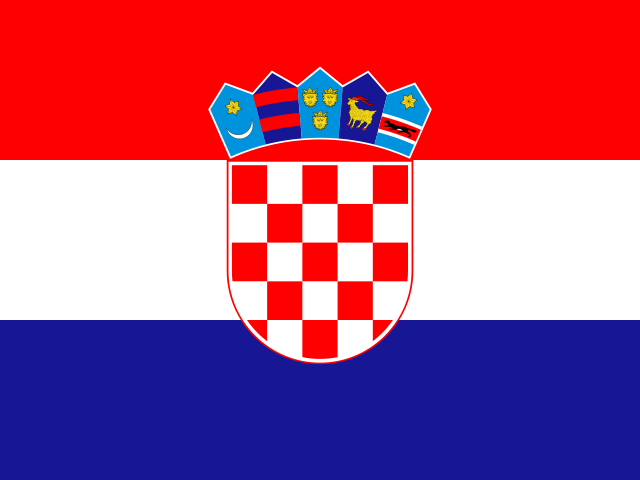
About the Croatian Kuna
The Kuna was reintroduced in 1994, replacing the Croatian Dinar which was a transitional currency after Croatia's independence from Yugoslavia. The Kuna was replaced by the Euro on January 1, 2023.
The word 'Kuna' means 'marten', a weasel-like animal whose pelts were used as a unit of value in medieval trade. 'Lipa' means 'linden tree'.
Interesting Facts
A Currency Named After an Animal
The Kuna was named after the marten, whose valuable fur was a unit of trade in the Middle Ages. It's one of the few modern currencies named after an animal.
Replaced by the Euro
On January 1, 2023, Croatia joined the Eurozone, and the Kuna was replaced by the Euro, marking a new chapter in the country's economic history.
Nikola Tesla on Coins
After joining the Euro, Croatia's national-side Euro coins now feature the image of inventor Nikola Tesla, a point of cultural pride and regional debate.
Historical Timeline
Croatia declares independence from Yugoslavia.
The Kuna is reintroduced as the national currency.
Croatia adopts the Euro, and the Kuna ceases to be legal tender.
Denominations
Banknotes
Coins
Security Features
Quick Facts
- ISO Code
- HRK
- Symbol
- kn
- Numeric Code
- 191
- Subunit
- Lipa (1/100)
- Introduced
- 1994-05-30
Central Bank
- Name
- Croatian National Bank
- Headquarters
- Zagreb, Croatia
- Founded
- 1990
- Current Governor
- Boris Vujčić (since 2012)
Economic Data
- Reserve Currency Share
- 0.0%
- Forex Volume Share
- 0.0%
Exchange Rates


Ready to Convert HRK?
Get real-time exchange rates and convert Croatian Kuna to any currency.


