
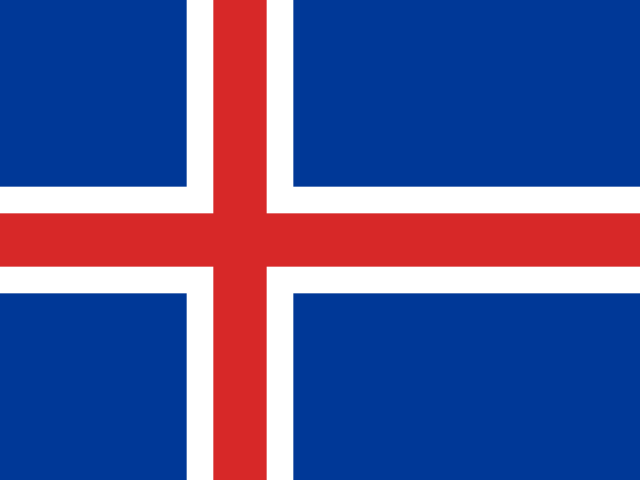
About the Icelandic Króna
The Icelandic Króna was introduced after the dissolution of the Scandinavian Monetary Union. It has undergone several periods of high inflation and devaluation, particularly during the 2008 financial crisis.
The name 'Króna', like the other Scandinavian 'krone' currencies, means 'crown'.
Interesting Facts
Currency of Fire and Ice
The Króna's value is closely tied to Iceland's unique economy, driven by tourism, fishing, and renewable energy.
The 2008 Crash
The Icelandic Króna was at the heart of the 2008 financial crisis, which saw the collapse of all three major Icelandic banks and a dramatic fall in the currency's value.
No More Small Change
The subunit 'eyrir' has not been in circulation since 2003 due to its low value.
Historical Timeline
Iceland gains sovereignty from Denmark.
The first Icelandic Króna is issued.
A new króna is introduced due to high inflation, at a rate of 100 old krónur to 1 new króna.
The Icelandic banking system collapses, leading to a severe currency crisis and the imposition of capital controls.
Denominations
Banknotes
Coins
Security Features
Quick Facts
- ISO Code
- ISK
- Symbol
- kr
- Numeric Code
- 352
- Subunit
- Eyrir (1/100)
- Introduced
- 1922-01-01
Central Bank
- Name
- Central Bank of Iceland
- Headquarters
- Reykjavík, Iceland
- Founded
- 1961
- Current Governor
- Ásgeir Jónsson (since 2019)
Economic Data
- Reserve Currency Share
- 0.0%
- Forex Volume Share
- 0.0%
- Inflation Rate
- 6.2%
- Interest Rate
- 9.25%
Exchange Rates


What Affects the ISK Exchange Rate?
Ready to Convert ISK?
Get real-time exchange rates and convert Icelandic Króna to any currency.


