
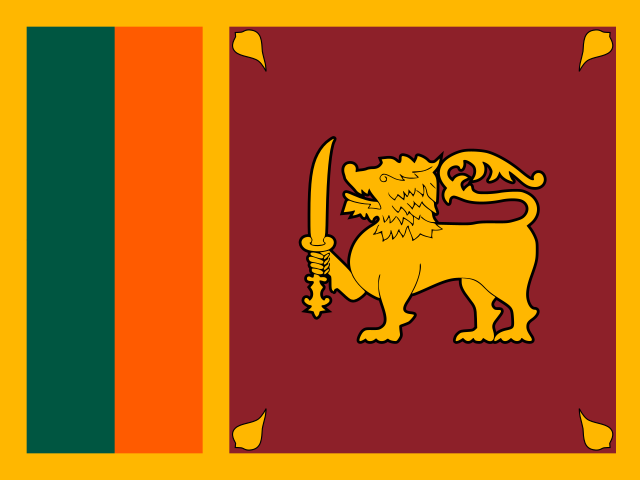
About the Sri Lankan Rupee
The Sri Lankan Rupee was introduced in 1872, replacing the British Pound as the official currency of what was then British Ceylon. The country has faced a severe economic crisis since 2019, leading to a default and massive devaluation of the rupee.
The name 'Rupee' is derived from the Sanskrit word 'rupya', meaning 'wrought silver'.
Interesting Facts
A Currency in Crisis
Since 2019, the Sri Lankan Rupee has been at the center of a profound economic crisis, caused by debt, mismanagement, and external shocks, leading to hyperinflation and a national default.
Vertical Banknotes
Sri Lankan banknotes have a vertical orientation on the reverse side, showcasing the country's vibrant culture, wildlife, and ancient heritage.
Bridges and Birds
The banknote series features endemic birds of Sri Lanka on the front and illustrates national development projects and cultural themes on the back.
Historical Timeline
The Rupee replaces the British Pound.
Ceylon gains independence.
The country is renamed Sri Lanka.
Sri Lanka defaults on its debt, and the rupee collapses amid a severe economic crisis.
Denominations
Banknotes
Coins
Security Features
Quick Facts
- ISO Code
- LKR
- Symbol
- Rs
- Numeric Code
- 144
- Subunit
- Cent (1/100)
- Introduced
- 1872-01-01
Central Bank
- Name
- Central Bank of Sri Lanka
- Headquarters
- Colombo, Sri Lanka
- Founded
- 1950
- Current Governor
- P. Nandalal Weerasinghe (since 2022)
Economic Data
- Reserve Currency Share
- 0.0%
- Forex Volume Share
- 0.0%
- Inflation Rate
- 2.5%
- Interest Rate
- 8.50%
Exchange Rates



What Affects the LKR Exchange Rate?
Ready to Convert LKR?
Get real-time exchange rates and convert Sri Lankan Rupee to any currency.


