About the Malawian Kwacha
The Kwacha was introduced in 1971, replacing the Malawian pound at a rate of 2 Kwacha per 1 pound, as part of the country's decimalisation.
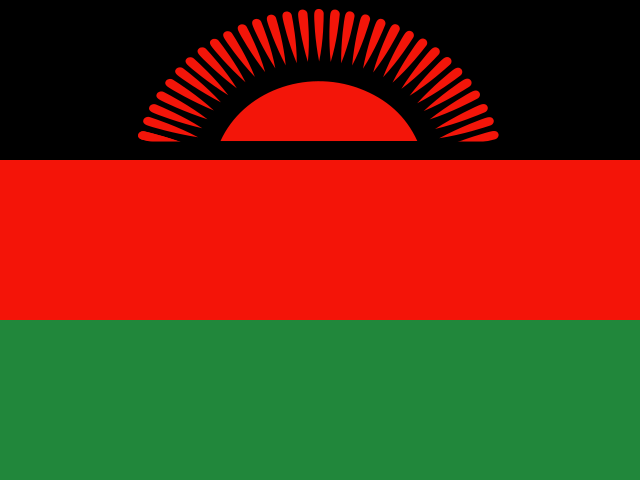
The name 'Kwacha' means 'dawn' in Chichewa and Bemba, symbolizing the dawn of independence. 'Tambala' means 'rooster'.
Interesting Facts
The Dawn of Independence
The name 'Kwacha' signifies 'dawn' in Chichewa, symbolizing the country's independence. 'Tambala' means 'rooster', often associated with the rising sun.
A Currency of Agriculture
Malawi's economy is heavily agrarian, with tobacco, tea, and sugar being key exports. The Kwacha's value is significantly influenced by agricultural output and global commodity prices.
Dr. Hastings Banda
Malawian banknotes typically feature the portrait of Dr. Hastings Kamuzu Banda, the first President of Malawi, who ruled for three decades.
Historical Timeline
Malawi gains independence.
The Kwacha is introduced.
Denominations
Banknotes
Coins
Security Features
Quick Facts
- ISO Code
- MWK
- Symbol
- MK
- Numeric Code
- 454
- Subunit
- Tambala (1/100)
- Introduced
- 1971-01-01
Central Bank
- Name
- Reserve Bank of Malawi
- Headquarters
- Lilongwe, Malawi
- Founded
- 1964
- Current Governor
- Wilson T. Banda (since 2020)
Economic Data
- Reserve Currency Share
- 0.0%
- Forex Volume Share
- 0.0%
- Inflation Rate
- 32.4%
- Interest Rate
- 24.0%
Exchange Rates
What Affects the MWK Exchange Rate?
Ready to Convert MWK?
Get real-time exchange rates and convert Malawian Kwacha to any currency.


