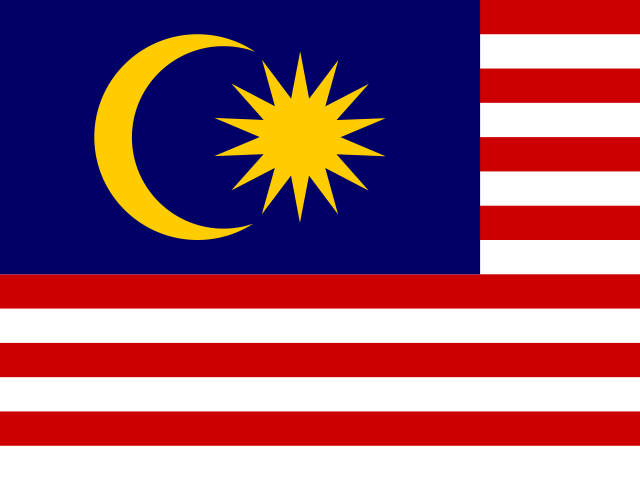
About the Malaysian Ringgit
The Malaysian Ringgit was introduced in 1967, replacing the Malaya and British Borneo dollar. It was pegged to the U.S. Dollar from 1998 to 2005.
The word 'Ringgit' is an archaic Malay term for 'jagged', referring to the serrated edges of old Spanish silver coins.
Interesting Facts
Polymer Pioneer in Asia
Malaysia was among the first countries in Asia to introduce polymer banknotes for all its denominations, starting with the RM5 in 1999.
A Nation's Vision on Currency
Malaysian banknotes feature motifs reflecting the country's economic progress and diverse culture, including the first Prime Minister, Tunku Abdul Rahman Putra Al-Haj, and the Petronas Twin Towers.
From Jagged Edges
The name 'Ringgit' refers to the serrated edges of the Spanish silver dollars that were widely used in the region centuries ago, giving a historical nod to its colonial trade past.
Historical Timeline
Malaysia is formed.
The Ringgit is introduced.
The Ringgit is pegged to the U.S. Dollar during the Asian Financial Crisis.
The peg to the U.S. Dollar is removed, and the Ringgit moves to a managed float.
Denominations
Banknotes
Coins
Security Features
Quick Facts
- ISO Code
- MYR
- Symbol
- RM
- Numeric Code
- 458
- Subunit
- Sen (1/100)
- Introduced
- 1967-06-12
Central Bank
- Name
- Central Bank of Malaysia
- Headquarters
- Kuala Lumpur, Malaysia
- Founded
- 1959
- Current Governor
- Abdul Rasheed Ghaffour (since 2023)
Economic Data
- Reserve Currency Share
- 0.1%
- Forex Volume Share
- 0.8%
- Inflation Rate
- 1.8%
- Interest Rate
- 3.00%
Exchange Rates

What Affects the MYR Exchange Rate?
Ready to Convert MYR?
Get real-time exchange rates and convert Malaysian Ringgit to any currency.


