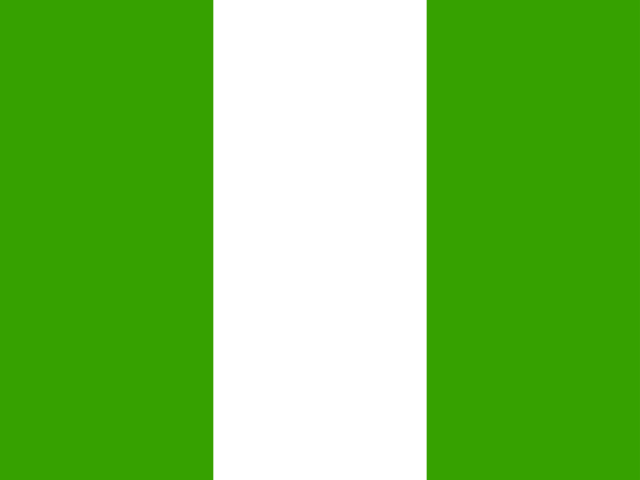
About the Nigerian Naira
The Naira was introduced in 1973, replacing the Nigerian Pound. It was the first time that Nigeria had its own decimal currency.
The name 'Naira' is a contraction of 'Nigeria', while 'Kobo' is derived from the word 'copper'.
Interesting Facts
Africa's Most Populous Economy
The Naira is the currency of Nigeria, Africa's largest economy and most populous nation. Its value is heavily influenced by oil production and global energy prices.
The eNaira
Nigeria was one of the first countries to launch a central bank digital currency (CBDC), the eNaira, demonstrating its commitment to digital innovation.
National Unity on Notes
Nigerian banknotes feature various national figures and symbols representing the diverse ethnic groups and unity of the country.
Historical Timeline
Nigeria gains independence.
The Naira replaces the Nigerian Pound.
The Central Bank of Nigeria launches the eNaira, a central bank digital currency (CBDC).
Denominations
Banknotes
Coins
Security Features
Quick Facts
- ISO Code
- NGN
- Symbol
- ₦
- Numeric Code
- 566
- Subunit
- Kobo (1/100)
- Introduced
- 1973-01-01
Central Bank
- Name
- Central Bank of Nigeria
- Headquarters
- Abuja, Nigeria
- Founded
- 1958
- Current Governor
- Olayemi Cardoso (since 2023)
Economic Data
- Reserve Currency Share
- 0.0%
- Forex Volume Share
- 0.0%
- Inflation Rate
- 33.69%
- Interest Rate
- 26.25%
Exchange Rates
What Affects the NGN Exchange Rate?
Ready to Convert NGN?
Get real-time exchange rates and convert Nigerian Naira to any currency.


