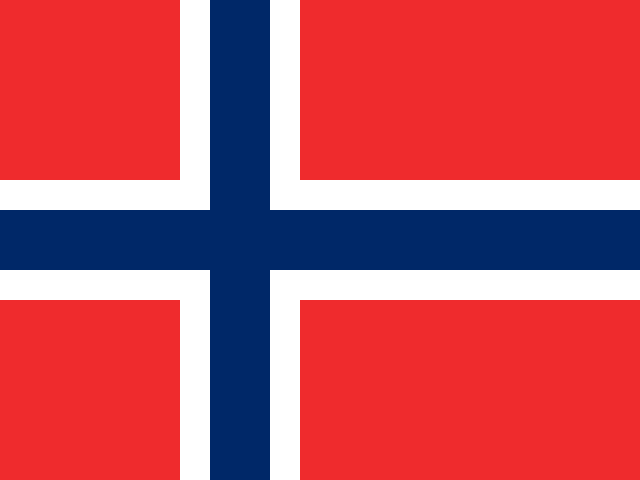
About the Norwegian Krone
The Norwegian Krone was introduced in 1875 as part of the Scandinavian Monetary Union. The union dissolved in 1914, but Norway retained the 'krone' as its currency.
The name 'Krone' means 'crown' in Norwegian, a common name for currencies in monarchies.
Interesting Facts
Oil and the Sovereign Wealth Fund
The Norwegian Krone is a petro-currency, heavily influenced by oil prices. Norway's massive sovereign wealth fund (Government Pension Fund Global) makes its economy incredibly stable.
Maritime-Themed Banknotes
The latest series of banknotes features modern, abstract designs with strong maritime themes, including lighthouses, ships, and waves, reflecting Norway's connection to the sea.
No Euro
Despite being in Europe, Norway is not a member of the European Union and has no plans to adopt the Euro, maintaining its independent monetary policy.
Historical Timeline
The Krone is introduced.
The Scandinavian Monetary Union is dissolved.
A new series of banknotes with maritime themes is introduced.
Denominations
Banknotes
Coins
Security Features
Quick Facts
- ISO Code
- NOK
- Symbol
- kr
- Numeric Code
- 578
- Subunit
- Øre (1/100)
- Introduced
- 1875-01-01
Central Bank
- Name
- Norges Bank
- Headquarters
- Oslo, Norway
- Founded
- 1816
- Current Governor
- Ida Wolden Bache (since 2022)
Economic Data
- Reserve Currency Share
- 0.1%
- Forex Volume Share
- 1.8%
- Inflation Rate
- 3.6%
- Interest Rate
- 4.50%
Exchange Rates
Used In
What Affects the NOK Exchange Rate?
Ready to Convert NOK?
Get real-time exchange rates and convert Norwegian Krone to any currency.


