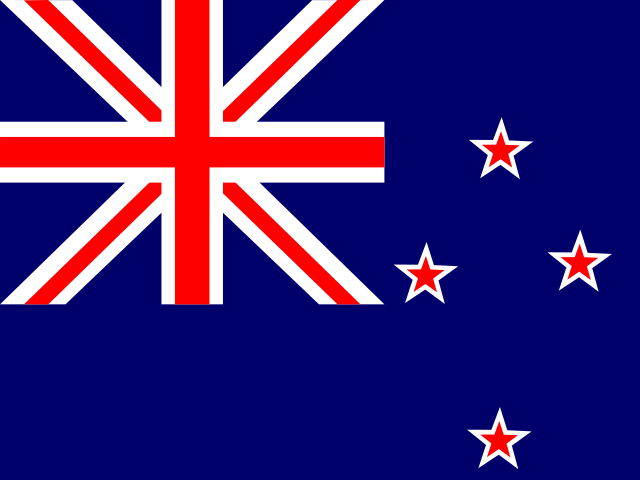
About the New Zealand Dollar
The New Zealand Dollar was introduced in 1967, replacing the New Zealand pound as part of the country's decimalisation. It was initially pegged to the British Pound Sterling.
The name 'Dollar' was chosen after a public competition, with other suggestions including 'kiwi' and 'fern'.
Interesting Facts
The 'Kiwi' Currency
The New Zealand Dollar is often informally referred to as the 'Kiwi' or 'Kiwi Dollar' by currency traders, a nod to the national bird of New Zealand.
World's First Polymer Notes
New Zealand was the first country to issue polymer banknotes for all denominations, starting in 1999, improving durability and security.
Diverse Flora and Fauna
New Zealand's banknotes celebrate its unique natural heritage, featuring native birds like the Hoiho (yellow-eyed penguin) and Kokako, and iconic landscapes.
Historical Timeline
The Reserve Bank of New Zealand is established.
The New Zealand Dollar is introduced.
The New Zealand Dollar is floated, removing its peg to the U.S. Dollar.
Polymer banknotes are introduced.
Denominations
Banknotes
Coins
Security Features
Quick Facts
- ISO Code
- NZD
- Symbol
- NZ$
- Numeric Code
- 554
- Subunit
- Cent (1/100)
- Introduced
- 1967-07-10
Central Bank
- Name
- Reserve Bank of New Zealand
- Headquarters
- Wellington, New Zealand
- Founded
- 1934
- Current Governor
- Adrian Orr (since 2018)
Economic Data
- Reserve Currency Share
- 0.1%
- Forex Volume Share
- 2.1%
- Inflation Rate
- 4.0%
- Interest Rate
- 5.50%
Exchange Rates


Used In
What Affects the NZD Exchange Rate?
Ready to Convert NZD?
Get real-time exchange rates and convert New Zealand Dollar to any currency.


