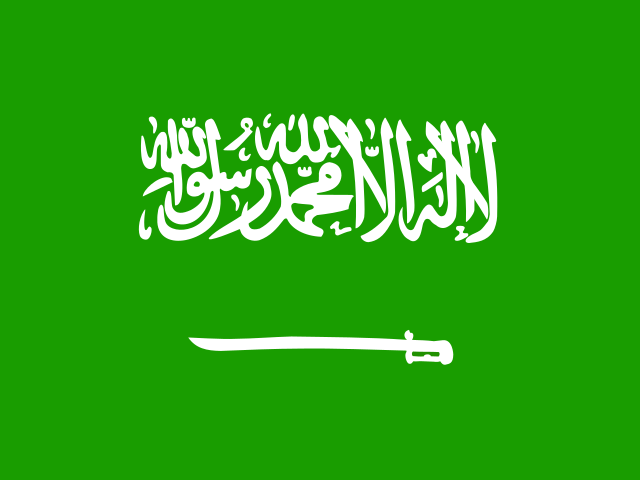
About the Saudi Riyal
The Saudi Riyal was introduced in 1935. It replaced the Hejaz and Nejd riyal. It has been pegged to the U.S. Dollar since 1986.
The name 'Riyal' is derived from the Spanish 'real', a silver coin widely used in the Middle East.
Interesting Facts
Pegged to the US Dollar
The Saudi Riyal has a strong and long-standing peg to the U.S. Dollar, providing stability to the Saudi economy, which is the largest in the Middle East.
Oil Wealth and Vision 2030
The value of the Riyal is intrinsically linked to Saudi Arabia's vast oil reserves. The nation is actively diversifying its economy through 'Vision 2030' to reduce oil dependence.
Kings and Sacred Sites
Saudi banknotes feature portraits of the reigning king on the front and images of important Islamic holy sites (like the Kaaba in Mecca) and national landmarks on the reverse.
Historical Timeline
The Kingdom of Saudi Arabia is established.
The Saudi Riyal is introduced.
The Riyal is officially pegged to the U.S. Dollar at a fixed rate of 1 USD = 3.75 SAR.
Denominations
Banknotes
Coins
Security Features
Quick Facts
- ISO Code
- SAR
- Symbol
- ر.س
- Numeric Code
- 682
- Subunit
- Halala (1/100)
- Introduced
- 1935-01-01
Central Bank
- Name
- Saudi Central Bank
- Headquarters
- Riyadh, Saudi Arabia
- Founded
- 1952
- Current Governor
- Fahad Almubarak (since 2021)
Economic Data
- Reserve Currency Share
- 0.1%
- Forex Volume Share
- 0.4%
- Inflation Rate
- 1.6%
- Interest Rate
- 6.00%
Exchange Rates

What Affects the SAR Exchange Rate?
Ready to Convert SAR?
Get real-time exchange rates and convert Saudi Riyal to any currency.


