
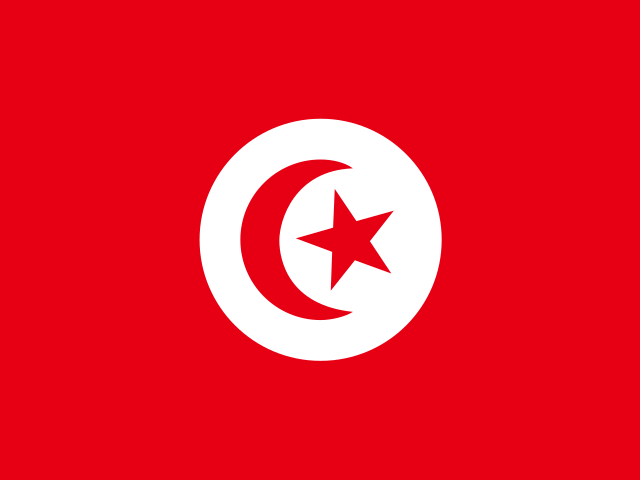
About the Tunisian Dinar
The Tunisian Dinar was introduced in 1958, replacing the Tunisian franc at a rate of 1 Dinar = 1,000 francs. It has generally been a stable currency, though it has experienced fluctuations.
The name 'Dinar' is derived from the ancient Roman coin, the 'denarius'.
Interesting Facts
Three Decimal Places
The Tunisian Dinar is one of the few currencies in the world divided into 1,000 subunits (millimes), requiring three decimal places for its prices.
A Gateway to the Mediterranean
Tunisia's economy, and the Dinar's value, is strongly influenced by tourism, agriculture (especially olive oil), and exports to Europe.
Historical Figures and Heritage
Tunisian banknotes feature prominent national figures, such as Ibn Khaldun (a renowned Arab historian) and Habib Bourguiba (Tunisia's first president), alongside ancient Carthage ruins and other cultural landmarks.
Historical Timeline
Tunisia gains independence from France.
The Tunisian Dinar is introduced.
The Tunisian Revolution begins, impacting economic stability.
Denominations
Banknotes
Coins
Security Features
Quick Facts
- ISO Code
- TND
- Symbol
- د.ت
- Numeric Code
- 788
- Subunit
- Millime (1/1000)
- Introduced
- 1958-01-01
Central Bank
- Name
- Central Bank of Tunisia
- Headquarters
- Tunis, Tunisia
- Founded
- 1958
- Current Governor
- Fethi Zouhair Nouri (since 2024)
Economic Data
- Reserve Currency Share
- 0.0%
- Forex Volume Share
- 0.0%
- Inflation Rate
- 7.2%
- Interest Rate
- 8.00%
Exchange Rates


What Affects the TND Exchange Rate?
Ready to Convert TND?
Get real-time exchange rates and convert Tunisian Dinar to any currency.


