
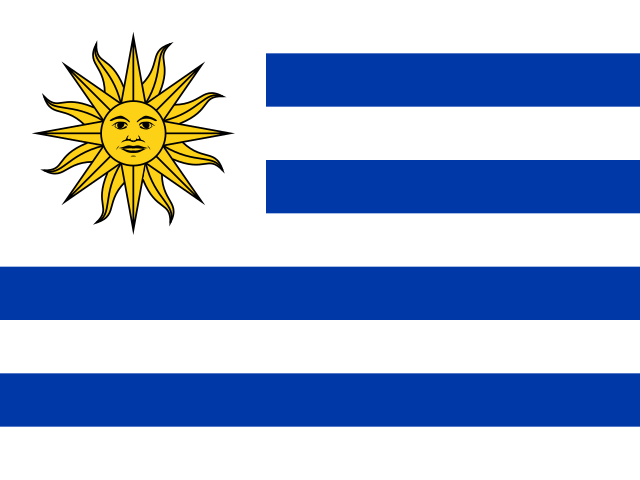
About the Uruguayan Peso
The current Uruguayan Peso was introduced in 1993, replacing the Nuevo Peso. It has a history of stability compared to some of its South American neighbors, though it has experienced periods of depreciation.
The name 'Peso' means 'weight' in Spanish, referring to the traditional Spanish silver dollar.
Interesting Facts
A Relatively Stable Peso
Compared to many South American currencies, the Uruguayan Peso has maintained a relatively stable value, supported by prudent economic policies.
National Heroes on Notes
Uruguayan banknotes feature prominent national heroes and figures, such as José Artigas, the national hero of Uruguay, and Pedro Figari, a renowned painter.
Green Uruguay
Uruguay is a leading producer of agricultural products, particularly beef and soybeans, which are key drivers of its economy and the Peso's value.
Historical Timeline
The first Uruguayan Peso is introduced.
The Nuevo Peso replaces the old peso due to inflation.
The current Uruguayan Peso is introduced.
Denominations
Banknotes
Coins
Security Features
Quick Facts
- ISO Code
- UYU
- Symbol
- $U
- Numeric Code
- 858
- Subunit
- Centésimo (1/100)
- Introduced
- 1993-03-01
Central Bank
- Name
- Central Bank of Uruguay
- Headquarters
- Montevideo, Uruguay
- Founded
- 1967
- Current Governor
- Diego Labat (since 2020)
Economic Data
- Reserve Currency Share
- 0.0%
- Forex Volume Share
- 0.0%
- Inflation Rate
- 3.8%
- Interest Rate
- 8.50%
Exchange Rates




What Affects the UYU Exchange Rate?
Ready to Convert UYU?
Get real-time exchange rates and convert Uruguayan Peso to any currency.


