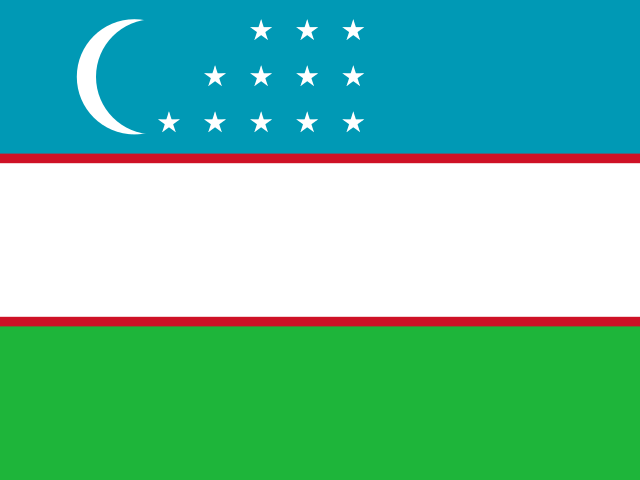
About the Uzbekistani Som
The Uzbekistani Som was introduced in 1994, replacing the Russian Ruble. It replaced a transitional coupon currency that was in use after Uzbekistan's independence from the Soviet Union.
The word 'Som' means 'pure' in Turkic languages, referring to pure gold. It's a common name for currencies in Central Asia.
Interesting Facts
Cotton and Gold Economy
Uzbekistan is a major producer of cotton and gold, which are key exports driving the economy and influencing the Som's value.
Ancient Silk Road Cities
Uzbekistan's banknotes feature iconic architectural landmarks from its ancient Silk Road cities, such as the Registan Square in Samarkand and the Poi Kalyan Complex in Bukhara.
Currency Liberalization
Since 2017, Uzbekistan has undertaken significant currency reforms, including liberalizing the exchange rate and making the Som fully convertible, a major step towards a market economy.
Historical Timeline
Uzbekistan gains independence from the Soviet Union.
The Som is introduced.
Denominations
Banknotes
Coins
Security Features
Quick Facts
- ISO Code
- UZS
- Symbol
- so'm
- Numeric Code
- 860
- Subunit
- Tiyin (1/100)
- Introduced
- 1994-07-01
Central Bank
- Name
- Central Bank of the Republic of Uzbekistan
- Headquarters
- Tashkent, Uzbekistan
- Founded
- 1991
- Current Governor
- Mamarizo Nurmuratov (since 2017)
Economic Data
- Reserve Currency Share
- 0.0%
- Forex Volume Share
- 0.0%
- Inflation Rate
- 10.4%
- Interest Rate
- 14.0%
Exchange Rates
What Affects the UZS Exchange Rate?
Ready to Convert UZS?
Get real-time exchange rates and convert Uzbekistan Som to any currency.


