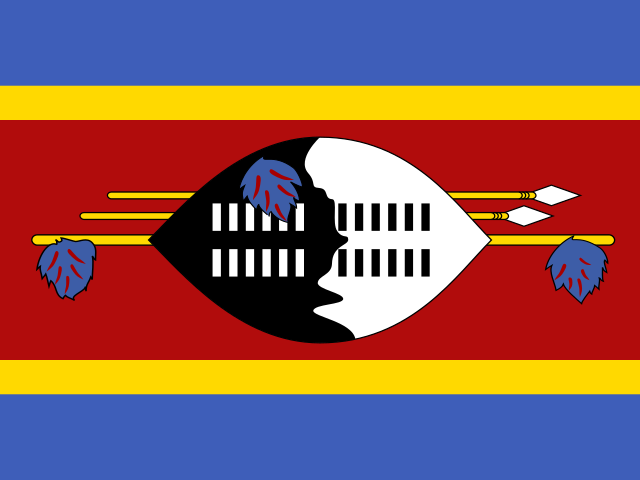
About the Eswatini Lilangeni
The Lilangeni was introduced in 1974, replacing the South African Rand. It is pegged at par with the Rand, which also remains legal tender in Eswatini.
The name 'Lilangeni' derives from the Swazi word for 'money'. Its plural is 'Emalangeni'.
Interesting Facts
Pegged to the Rand
The Lilangeni is pegged 1:1 to the South African Rand as part of the Common Monetary Area. The Rand is widely accepted as legal tender in Eswatini.
King Mswati III
Banknotes feature the portrait of the reigning monarch, King Mswati III, a symbol of national identity and continuity.
A Mountain Kingdom's Economy
Eswatini's economy is closely linked to South Africa. Exports include sugar, soft drink concentrates, and timber.
Historical Timeline
Swaziland gains independence.
The Lilangeni is introduced and pegged to the South African Rand.
The country's name is changed from Swaziland to Eswatini.
Denominations
Banknotes
Coins
Security Features
Quick Facts
- ISO Code
- SZL
- Symbol
- E
- Numeric Code
- 748
- Subunit
- Cent (1/100)
- Introduced
- 1974-09-06
Central Bank
- Name
- Central Bank of Eswatini
- Headquarters
- Mbabane, Eswatini
- Founded
- 1974
- Current Governor
- Phil Mnisi (since 2022)
Economic Data
- Reserve Currency Share
- 0.0%
- Forex Volume Share
- 0.0%
- Inflation Rate
- 3.8%
- Interest Rate
- 7.75%
Exchange Rates

What Affects the SZL Exchange Rate?
Ready to Convert SZL?
Get real-time exchange rates and convert Swazi Lilangeni to any currency.


